
📌 Quick Facts About Vanuatu 🇻🇺
Vanuatu is an island nation in the South Pacific made up of roughly 80 islands, stretching in a long volcanic chain between Australia, New Caledonia, Fiji, and the Solomon Islands.
Port Vila, the capital, sits on Efate Island and is around 1,900 kilometers northeast of Brisbane. That makes Vanuatu feel remote, but still much more accessible than many of the tiny atoll countries deeper in the Pacific.
- 🏛️ CapitalPort Vila
- 💵 CurrencyVanuatu vatu (VUV)
- 🗣️ LanguageBislama, English, French, and local languages
- 🌡️ ClimateTropical
- 🔌 Plug typeType I · *Anker Universal Travel Adapter
- 🌺 RegionMelanesia, Oceania
👋 Arriving in Vanuatu
I flew to Vanuatu directly from Brisbane, and after Vanuatu I continued northward toward the Solomon Islands and eventually deeper into the Pacific.
Looking back now, Vanuatu was honestly a fantastic introduction to Oceania: friendly, tropical, culturally fascinating, and still easy enough to travel compared with some of the more remote Pacific countries.
The moment I arrived, I already knew this trip would be memorable. At immigration in Port Vila Airport, the immigration officer suddenly recognized me from TikTok.
He looked at me, smiled, and basically said: “Finally in Vanuatu. Welcome to my country.”
That completely caught me off guard. It was my very first Pacific island nation, and I remember thinking how surreal it felt that somebody in Vanuatu had seen my travel videos online. It immediately made the arrival feel incredibly welcoming.
🏝️ Walking to Pango and First Impressions of Port Vila
After landing, and taking a bus to Port towards Port Vila, I walked from the Northern part of the city all the way to my accommodation.
I stayed at a small place called Blue Pango Guest House, located south of Port Vila in the Pango area.
The walk itself already gave me a really nice first impression of Vanuatu. Port Vila feels calm, tropical, and very laid-back compared with most capitals around the world. The roads were quiet, people greeted me constantly, and there was an immediate island atmosphere that made everything feel relaxed.
The accommodation itself was simple hostel-style lodging, but honestly it was beautiful because of the location: directly by the water in a peaceful area filled with little houses, beaches, palm trees, and basically nothing else.

💦 Visiting the Blue Lagoon on Efate
I stayed in a dorm room and initially had it entirely to myself. Later that evening, another traveler arrived, a girl from Spain called Mar, and we ended up exploring parts of the island together during the next days.
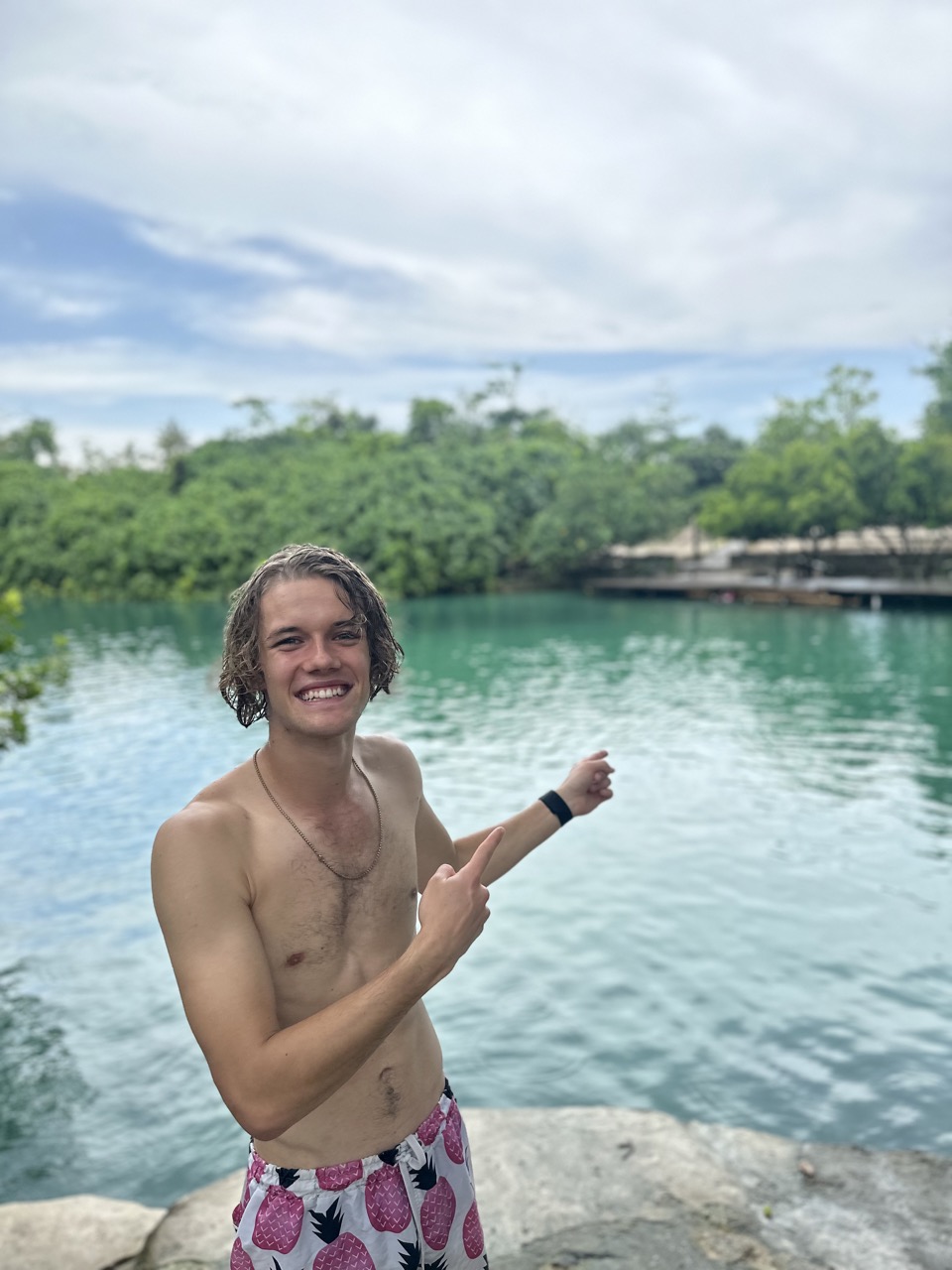
One of the absolute highlights of Efate, the main island of Vanuatu, was definitely the Blue Lagoon on the eastern side of the island. Getting there is already part of the adventure.
Public transportation in Vanuatu exists, but schedules are very unreliable, and you often have to improvise. We managed to take a bus there, but on the way back we eventually ended up hitchhiking because the public transport had already stopped.
The Blue Lagoon itself was absolutely stunning: a natural swimming area with crystal-clear turquoise water surrounded by lush tropical vegetation. One of the most fun parts are the rope swings hanging from the trees where people swing out and jump directly into the water.
We spent hours there swimming, relaxing, jumping into the lagoon, and just enjoying the atmosphere. It is one of those places where you completely lose track of time.

🗣️ Vanuatu's Incredible Language Diversity
Apart from the Blue Lagoon, we also spent a lot of time simply exploring Port Vila. We visited the National Museum of Vanuatu, which I actually found incredibly interesting because Vanuatu is culturally and linguistically one of the most fascinating countries on Earth.
In fact, Vanuatu is considered the most linguistically diverse country in the world per capita. Papua New Guinea has more total languages overall, but Vanuatu has an unbelievable number of languages relative to its small population size.
Because many islands developed separately with limited contact between communities, partly due to geography and volcanic terrain, entirely separate languages evolved across different islands.
As somebody deeply interested in linguistics, I found that absolutely fascinating.
🍠 Trying Laplap in Port Vila
Walking around Port Vila itself was very relaxed. We explored local markets, wandered through town, and tried traditional food, including a famous dish called laplap.
Laplap is considered the national dish of Vanuatu and is traditionally made by grating root vegetables like taro, yam, or manioc, mixing them with coconut milk, wrapping everything in banana leaves, and then cooking it slowly, often in an underground earth oven.
Honestly? I personally did not love it the first time I tried it. But later, Mar tried laplap again somewhere else and insisted it tasted much better there, so maybe I simply got unlucky with my first version.

🥥 Trying Kava in Vanuatu
Another major part of Vanuatu culture is kava. You find kava bars absolutely everywhere across the country, and trying kava is almost a mandatory cultural experience when visiting Vanuatu.
Kava is a traditional Pacific drink made from the root of the kava plant. Locals drink it socially in the evenings to relax after work. In many ways, it functions almost like alcohol socially, except the effects are completely different.
Of course, I had to try it. The taste is honestly terrible. The best comparison I can give is that it tastes like drinking bitter muddy water or liquid sand. It is earthy, numbingly bitter, and not enjoyable from a culinary perspective whatsoever.
But the effect is very interesting. At first, nothing really happens. Then slowly, your body starts calming down more and more. Everything feels slower. Your muscles relax. Your reactions become delayed. It almost feels like your body freezes slightly.
Because I wanted the “full local experience,” I ended up drinking four or five cups. That was definitely too much for me. As somebody who basically never does drugs, the sensation felt incredibly strange. But fun.
Locals in Vanuatu are extremely proud of their kava, and many people told me that Vanuatu has the best kava in the Pacific. After trying it, I can at least confirm one thing: it is definitely strong.


🌋 The One Thing I Missed: Tanna Island
One thing I really regret from my time in Vanuatu is not having enough time to visit Tanna Island.
Tanna is famous for its active volcanoes, especially Mount Yasur, where visitors can apparently get astonishingly close to volcanic eruptions. I heard incredible things about it from other travelers, but my Pacific itinerary was already extremely packed and I simply did not have enough time to explore more islands within Vanuatu.
If I return one day, which I honestly hope I do, Tanna Island would definitely be my priority.
💭 Final Thoughts on Visiting Vanuatu
Overall, I genuinely really enjoyed Vanuatu. It felt like an amazing entry point into the Pacific: friendly people, beautiful nature, fascinating culture, incredible linguistic diversity, laid-back island life, and enough infrastructure to still travel relatively comfortably.
- Friendly people.
- Beautiful nature.
- Fascinating culture.
- Incredible linguistic diversity.
- Laid-back island life.
Vanuatu is also becoming increasingly popular with Australian tourists, and honestly I understand why. The combination of beaches, lagoons, volcanoes, waterfalls, jungle, and local culture makes it one of the most interesting countries in Oceania.
One final random memory: I also tried incredibly strong local chocolate filled with rum from a small chocolate shop in Port Vila. That somehow also perfectly summarizes Vanuatu: laid-back tropical island life mixed with unexpectedly strong local products.
