
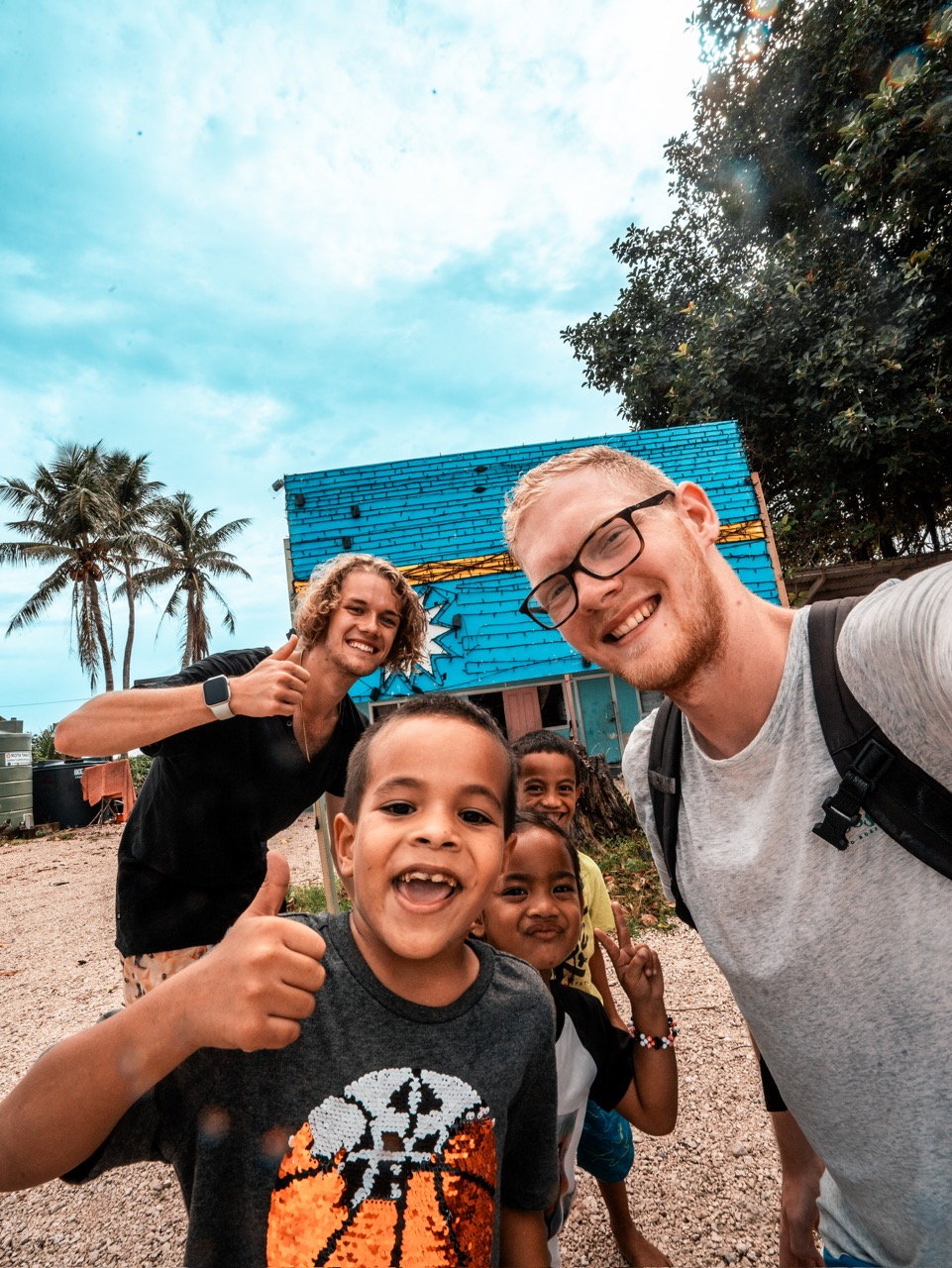
📌 Quick Facts About Nauru 🇳🇷
Nauru is one of the world's smallest countries and one of the most unusual places I visited in the Pacific. Unlike the tropical island fantasy many people imagine, Nauru feels rougher, stranger, more improvised, and much less polished.
It is tiny, isolated, rainy, logistically awkward, and honestly not my favorite island nation overall. But it is also incredibly fascinating.
- 🏛️ CapitalNo official capital; Yaren is the government district
- 💵 CurrencyAustralian dollar (AUD)
- 🗣️ LanguageNauruan and English
- 🌡️ ClimateTropical and humid
- 🔌 Plug typeType I · *Anker Universal Travel Adapter
- 🌺 RegionMicronesia, Oceania
✈️ Getting to Nauru
We arrived in Nauru from the Marshall Islands, with a transit stop in Kiribati along the way, and after Nauru we continued onward (or rather back to) to South Tarawa in Kiribati.
Even among Pacific island nations, Nauru feels incredibly isolated. Flying with Nauru Airlines already feels like part of the adventure, because the routes connect some of the most remote island countries on Earth.
If you enjoy unusual flight routes, obscure countries, and places that feel genuinely far away from everything else, Nauru is definitely memorable.

⛏️ Why Nauru Used to Be So Rich
One fascinating thing about Nauru is that the country used to be unbelievably rich. During the late 1970s and early 1980s, Nauru had one of the highest GDPs per capita in the world thanks to its massive phosphate industry.
The island was extremely rich in phosphate deposits formed from centuries of bird droppings, and for a while the country earned enormous amounts of money exporting it.
But over time, the phosphate reserves became depleted, investments were heavily mismanaged, and much of that wealth disappeared. Today, you can still feel traces of that history everywhere on the island.
🏛️ Yaren, the Ring Road and Driving Around Nauru
Nauru is tiny. You can literally drive around the entire country in around 35-40 minutes, and that is exactly what we did.
The whole island is essentially one ring road surrounding a raised interior filled with former phosphate mining areas. Nauru technically does not have an official capital city. Instead, government functions are centered around the district of Yaren, which is generally considered the capital district.
Yaren is right near the airport, and because the island is so small, everything feels surprisingly accessible. We walked around the government buildings, saw the Nauruan flag area where visitors often take photos, and explored nearby settlements.

🪸 Beaches in Nauru: Not the Pacific Island Fantasy
Overall, there honestly are not many traditional attractions in Nauru. One thing that surprised me was how difficult it is to properly enjoy the beaches.
Although Nauru is surrounded by ocean, much of the coastline is rocky and filled with sharp coral formations. In many places, swimming is difficult or dangerous because you can easily cut yourself on the coral below the surface.
- There is barely any surfing.
- Swimming options are limited.
- There are not many postcard-style beaches.

⚠️ The Australian Detention Center
One of the island's most infamous locations is the Australian detention center, which for years became internationally controversial because of Australia's offshore migrant detention policies.
Of course, we were curious and walked toward the complex to see it ourselves. But before getting particularly close, somebody informed us that we could not continue further toward the area.
In the end, we mostly just observed it from a distance.
🌧️ Phosphate Mines, Mud and Tropical Rain
From the detention center area, we continued walking toward the old phosphate mining areas in the center of the island. That landscape honestly felt eerie.
Large parts of central Nauru are covered with jagged limestone formations, muddy abandoned mining terrain, old industrial remnants, and rough landscapes left behind by decades of phosphate extraction.
At one point while walking through the muddy terrain, I actually lost one of my flip-flops and ended up continuing barefoot.
That pretty much summarizes the Nauru travel experience: improvised, muddy, strange, and very different from the typical tropical island fantasy people imagine.
The weather during our stay was absolutely brutal. One moment the weather would seem fine, and suddenly there would be an intense tropical downpour soaking us completely within seconds.


🍻 Grog Bar and Social Life in Nauru
One place we were repeatedly recommended to visit was Grog Bar in the north of the island. At the time, it was one of the main local gathering spots in Nauru.
The owner, Grog himself, had built up a little social atmosphere where locals and visitors would meet in the evenings for food, drinks, and music. Apparently the bar has since closed down, which is sad. I am grateful that we got to experience it while it still existed.
We spent an evening there eating, drinking, and talking with locals, which became one of the more memorable social moments of our stay.
Hitchhiking also works extremely well because there are basically only a few roads and everybody knows everybody. People are generally relaxed and willing to help visitors.

🏨 Where to Stay in Nauru
As for accommodation, we initially stayed at the Menen Hotel, probably the most famous hotel on Nauru. Honestly, I personally did not have a great experience there.
Because of the heavy rain, water got into parts of our room, there were quite a lot of bugs, and overall I just did not particularly enjoy the atmosphere there.
Later we switched accommodations and stayed at a place called Goodworks Accommodation, which was a bit better overall. That being said, accommodation options on Nauru are extremely limited, so visitors do not really have a huge amount of choice.

🥫 Food and Daily Practicalities in Nauru
Restaurants are limited. Supermarkets are limited. Activities are limited. And honestly, that is kind of true for almost everything in Nauru.
Nauru is statistically known for having some of the world's highest obesity rates, and once you spend time on the island, you begin to understand some of the reasons behind that.
Because the island imports most of its food, supermarket shelves are heavily dominated by canned products, sugary snacks, processed foods, and imported goods. Fresh produce options are relatively limited, and most restaurants are fairly basic Chinese-style restaurants serving simple meals.
Food was honestly not one of the highlights of the trip.

🛂 Nauru Visa: What Travelers Should Know
Another important thing travelers should know is that Nauru requires a visa for most visitors. Unlike many Pacific island nations that allow relatively easy visa-free access, Nauru requires travelers to organize approval in advance.
Thankfully, the process itself is not terribly complicated, but it does require
preparation. In practice, you basically send your documents and details by email to the
relevant visa contact in Nauru, wait for approval, and eventually receive confirmation
that you are allowed to travel.
The guy is called Cramer Cain and this is his email: cramer.cain@brisbane.gov.nr
Thank me later.
- Book hotels beforehand.
- Arrange flights beforehand.
- Prepare paperwork weeks in advance.
Personally, I honestly never fully understood why Nauru maintains such a restrictive visa system considering how few tourists visit the country anyway.
💭 Final Thoughts on Visiting Nauru
Looking back now after having visited every Pacific island nation, Nauru probably remains my least favorite one overall. That does not mean it was not interesting. Actually, it was incredibly fascinating.
But fascinating in a very different way. Nauru feels isolated, rough, surreal, and strangely forgotten by the rest of the world. It is a place where you really feel how remote you are from almost everything else on Earth.
If you enjoy unusual destinations, exotic flight routes, obscure countries, or simply want to experience one of the world's most isolated island nations, then Nauru can absolutely be worth visiting.
Would I recommend Nauru as a relaxing Pacific island vacation destination? Honestly, probably not. But it is definitely one of the most unique places I have ever visited.
After spending three days there, we finally left early in the morning on a Nauru Airlines flight toward Kiribati and continued our journey across the Pacific.