

📌 Quick Facts About Kiribati 🇰🇮
Kiribati is one of the most isolated island nations in the world, and visiting it feels very different from arriving in a classic resort destination. There are no huge tourist attractions, no luxury island circuit, and no packed itinerary waiting for you.
Instead, Kiribati is about remote atolls, community life, hitchhiking, Starlink routers, simple guesthouses, and some of the most untouched beaches I have seen anywhere on Earth.
- 🏛️ CapitalSouth Tarawa
- 💵 CurrencyAustralian dollar (AUD)
- 🗣️ LanguageGilbertese and English
- 🌡️ ClimateTropical marine
- 🔌 Plug typeType I · *Anker Universal Travel Adapter
- 🌺 RegionMicronesia, Oceania
🗣️ How to Pronounce Kiribati
Fun fact before we even begin: Kiribati is not actually pronounced “Kiribati.” In the local language, the “ti” is pronounced like an “s,” so the country is pronounced Kiribas.
The name itself comes from the Gilbert Islands, which were named after the British captain Thomas Gilbert. Since the local language does not naturally contain certain sounds used in English, “Gilberts” gradually transformed linguistically into “Kiribati.”
As someone interested in languages and linguistics, I found that detail fascinating even before arriving.
✈️ Getting to Kiribati
Kiribati is not necessarily complicated because of visas, but the remoteness makes the logistics expensive and limited. Flights in this part of the Pacific are a world of their own: distances are enormous, routes are limited, and competition is almost nonexistent.
- Expect high flight prices, especially between remote Pacific island nations.
- Build in patience, because schedules and island logistics can move slowly.
- Bring enough cash before arriving, because ATMs can be unreliable.
🌊 Tarawa and Kiribati's Huge Ocean Territory
One thing many people do not realize about Kiribati is just how enormous the country actually is. On a world map, Kiribati appears tiny. In reality, the country controls one of the largest maritime territories on Earth.
The islands themselves are just tiny dots scattered across a gigantic stretch of Pacific Ocean. Most of Kiribati is not land. It is ocean.
Because the country is spread across such a massive area, your experience in Kiribati depends heavily on which island group you visit. We visited Tarawa Atoll, specifically South Tarawa, which is the capital area and by far the most common place travelers end up visiting.
🤝 First Impressions of South Tarawa
The other major destination people often talk about is Kiritimati Island, also known internationally as Christmas Island, which is famous for fishing and remote Pacific landscapes. But for us, Tarawa became our base.
The first thing that struck me after arriving was how simple life felt there. Kiribati is not a place of luxury resorts, giant tourist attractions, or packed itineraries. Daily life moves slowly, and people seem genuinely adapted to that rhythm. There is almost no stress.
And somehow, that becomes incredibly relaxing very quickly.
Getting around was unbelievably easy because hitchhiking in Kiribati might genuinely be the easiest hitchhiking experience I have ever had anywhere in the world. People constantly help each other. If you need something, you simply ask somebody, and they usually try to help you.
That community feeling exists everywhere in Kiribati.


📶 Internet in Kiribati: Starlink Changed Everything
Another thing that surprised me was the internet situation. Kiribati used to be infamous for terrible connectivity because of its extreme remoteness. For years, internet access on the islands was painfully slow or nearly nonexistent.
But that has recently changed massively because of Starlink. Thanks to Starlink, we actually managed to get surprisingly decent Wi-Fi in parts of Kiribati, which honestly felt surreal considering where we were geographically.
Repeatedly throughout the trip, one of our most frequent “destinations” became wherever the nearest Starlink router happened to be so we could reconnect with the outside world for a little while. That became kind of funny after a while.
🏝️ Abatao: One of the Most Beautiful Beaches in the World
One of the first things we did after arriving was travel north toward Abatao, a smaller atoll area connected to the Tarawa region. Getting there involved hitchhiking northward and then crossing a shallow water section by small local boat.
Technically, you could even walk through the water if you really wanted to, but the water can get close to waist height in some places. Especially with bags or electronics, taking the little boat simply made more sense. The crossing only cost a couple of dollars and took just a few minutes.
Arriving there felt like entering another world.

🌴 Simple Bungalows, Coconuts and Slow Island Days
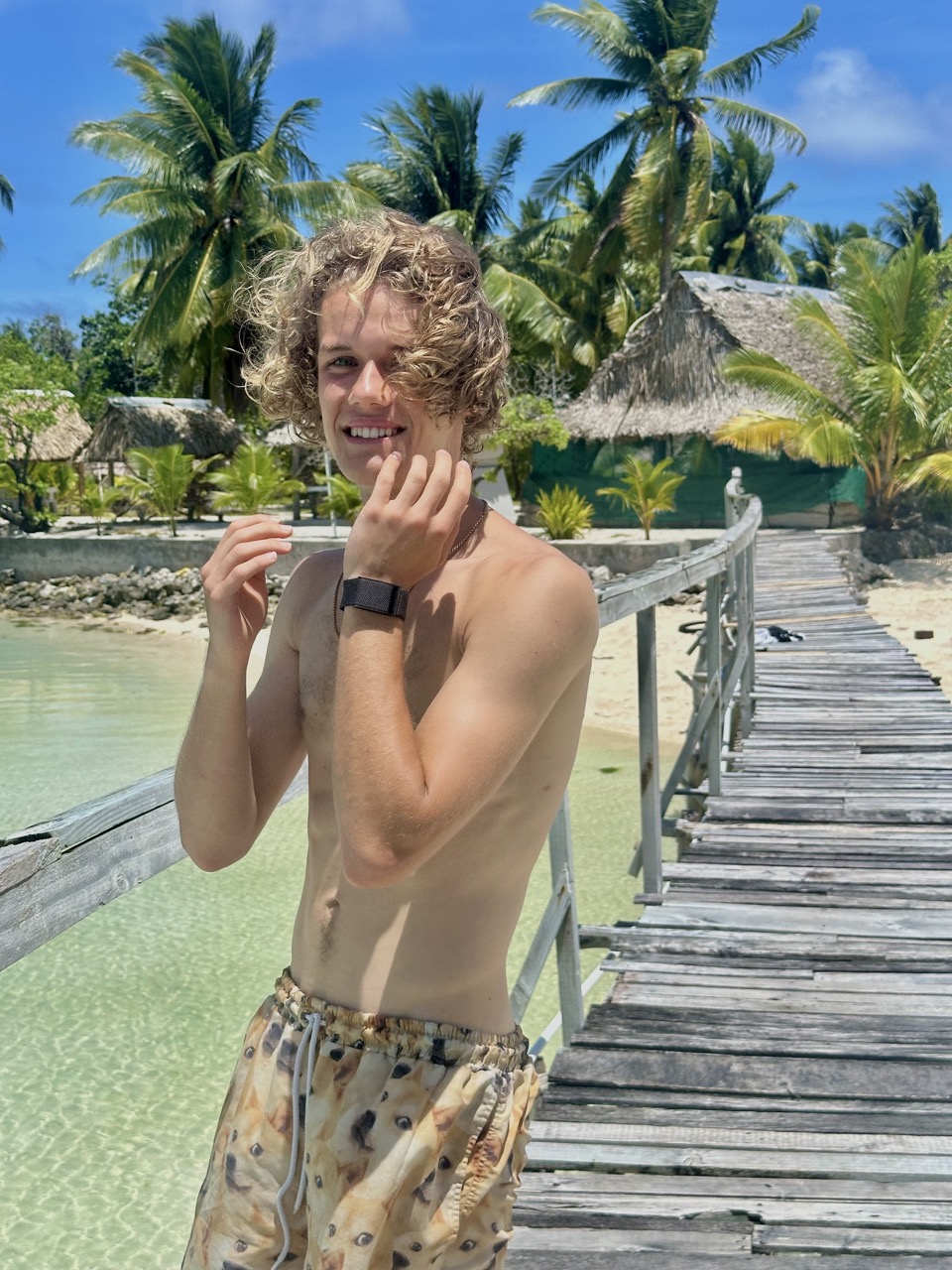
We stayed in a very simple bungalow-style lodge directly by the beach. Our place was called "Tabon Te Keekee Eco Lodge". The accommodation itself was basic and rustic, definitely not luxury, but visually it looked almost like one of those famous overwater-style tropical accommodations you see in the Maldives, just stripped down to the essentials.
But the beach itself was absolutely unbelievable. Even now, after finishing every country in the world, the beaches around Abatao are still among the most beautiful beaches I have ever seen anywhere on Earth.
Not because they are developed. Not because they are luxurious. Not because there are beach clubs or resorts. But because they felt untouched. The water was crystal clear, the sand almost unreal, and there were barely any people around. It genuinely felt like being on a deserted tropical island.
At the same time, there is not actually that much to “do” there in the traditional tourist sense. Kiribati is not really about activities. It is about slowing down.
- Bring a book.
- Lie in a hammock.
- Walk endlessly along the beach.
- Swim, get sunburned, and stare at the ocean for hours.
One thing that fascinated me was watching locals climb coconut trees. If somebody wanted a coconut, some of the islanders would simply sprint toward these massive palm trees, climb them effortlessly, and chop coconuts directly from the top. Watching them do it was honestly impressive because they made something incredibly dangerous look completely normal.
Weirdly enough, that already counts as a major source of excitement in Kiribati. That is the pace of life there.

🏛️ South Tarawa Sights and Practical Logistics
After our time near Abatao, we returned to South Tarawa, where we spent another two nights exploring the more populated southern parts of the atoll. We stayed in a small guesthouse, called Eniita Airport Lodge. It was very basic.
South Tarawa is where most government buildings and institutions are located, so we explored places like the presidential office, government areas, and several monuments scattered across the atoll.
Beyond that, daily life in Kiribati remained extremely simple. You are not going there for gourmet restaurants or luxury experiences. The islands are economically poor, and many people live with very limited resources. But despite that, the atmosphere never felt depressing to me. Actually, quite the opposite.
Kiribati felt incredibly safe, calm, and laid-back. People seemed genuinely content with the slower pace of life. There was a strong sense of community everywhere we went, and that is probably the strongest memory I still have when I think back to the country.


💸 Leaving Kiribati: My Most Expensive One-Way Flight
And then came the painful part: leaving. Because Kiribati is so isolated, flights are unbelievably expensive.
To this day, my flight from Tarawa onward toward Fiji remains the most expensive one-way flight ticket I have ever purchased in my life. I paid around €800 for a one-way flight.
And the craziest part? The flight itself is not even particularly long, less than three and a half hours. But that is the reality of traveling in the Pacific. Distances are enormous, routes are limited, and competition is almost nonexistent.
🎒 What to Bring to Kiribati
If you are planning to visit Kiribati yourself, there are a few things I would definitely recommend bringing.
- Cash, because ATMs can be unreliable and difficult to find.
- A universal plug adapter, like the *Anker Universal Travel Adapter.
- Patience, because things in Kiribati simply do not move fast.
Honestly, that is part of the beauty of the country. Kiribati forces you to slow down and adapt to island life instead of trying to impose your own pace onto it.
💭 Final Thoughts on Visiting Kiribati
Kiribati often looks tiny and remote from the outside, but once you are there, it becomes much more than a dot in the Pacific. It is a place of beautiful beaches, calm days, easy hitchhiking, Starlink searches, coconut trees, and very peaceful island life.
My strongest memory is not a landmark, an attraction, or a specific activity. It is the feeling of being somewhere slow, safe, community-focused, and genuinely far away from almost everything else.
For some travelers, Kiribati may sound boring. For me, it became one of the most peaceful and memorable island experiences anywhere in the world.